Deal Me In

Matt McQueen · 4 min read
On this page
I've been writing software for decades. It started as a hobby, and it's been a good career. One thing I've never been keen on is coming home from work and then firing up the computer to work on a side project. Having been out of the game for a few years, I needed to get up to speed in a software development world that is very different from how I left it. I had to get used to using AI tools - something that didn't even exist back then. I also wanted whatever I created to be useful and fun. The result is this blog, and a number of other sites.
Brand New had only just gone live when I started on the next one, and this time it's card games. Six of them, in fact.
They're all free, they all run in your browser, and you play against the computer, so there's no waiting around for anyone else to take their turn. There's no real money involved either: the chips in Blackjack and Texas Hold'em have no value, and none of this is a gambling site.
The games
Each game has its own address, and its own "How to play" page, if you need the rules or a reminder.
Blackjack
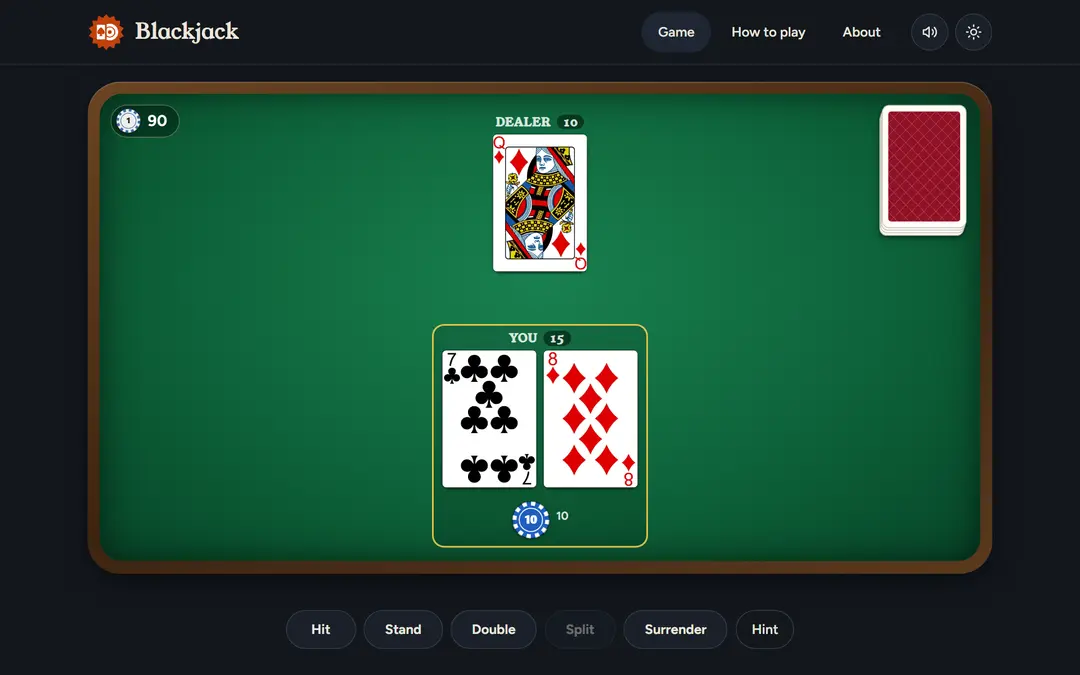
Just you against the dealer. You start with 100 chips and can bet between 1 and 20 a hand. Blackjack pays 3 to 2, the dealer stands on all 17s, and you can double, split or surrender. If you're not sure what to do, the Hint button tells you what the basic strategy cheat sheet says. Whether you take its advice is up to you.
Texas Hold'em
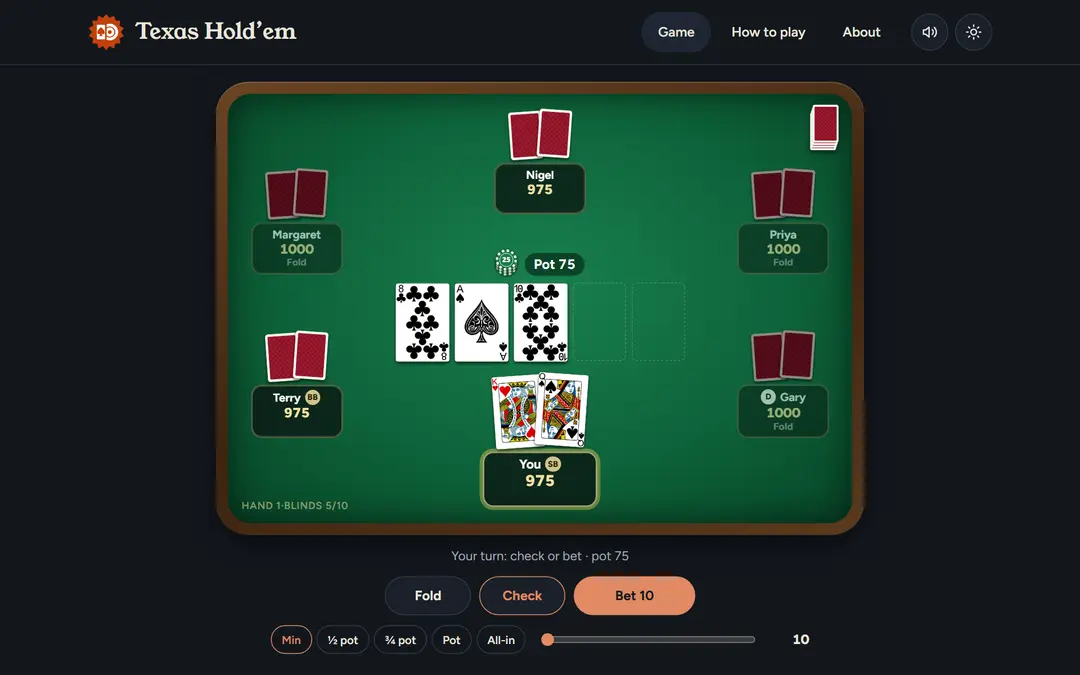
A tournament against five computer players, played by the rules of a UK casino cardroom. Everyone starts with 1,000 chips, the blinds double every 10 hands, and the last player with any chips left wins. Each computer player has its own style - some play lots of hands, some are aggressive, and some like a bluff - and some are better than others. I'll leave you to work out which.
Hearts
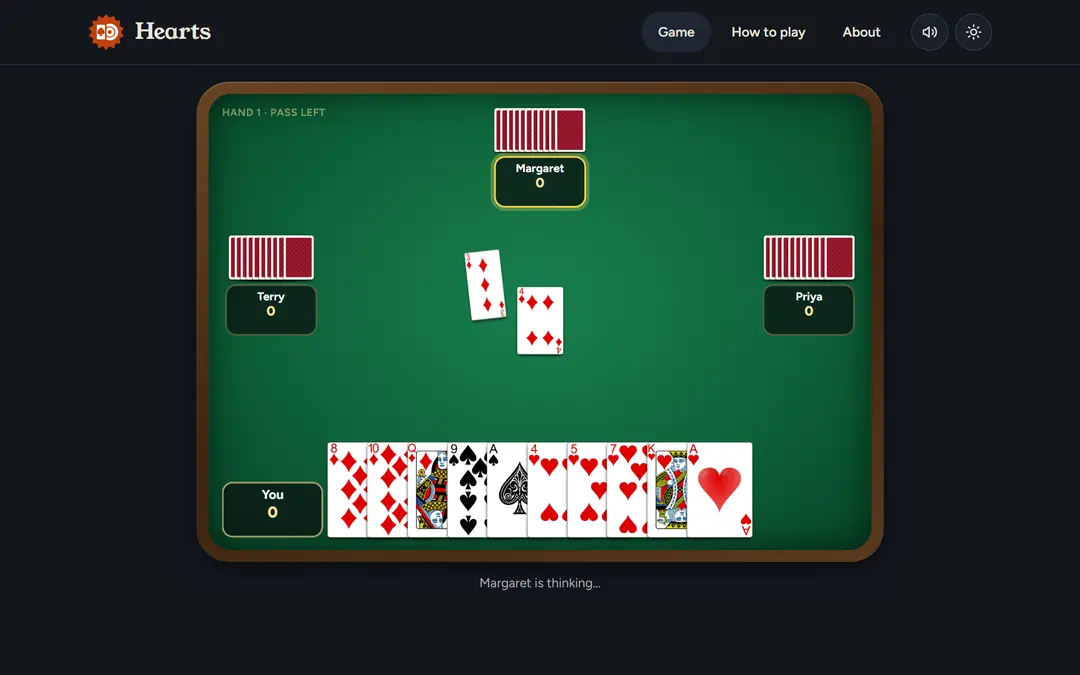
You against Terry, Margaret and Priya. Pass three cards, avoid the hearts and, above all, avoid the queen of spades, who is worth 13 points on her own. Or take every heart and the queen as well, and shoot the moon. The game ends when someone reaches 100, and the lowest score wins.
Spades
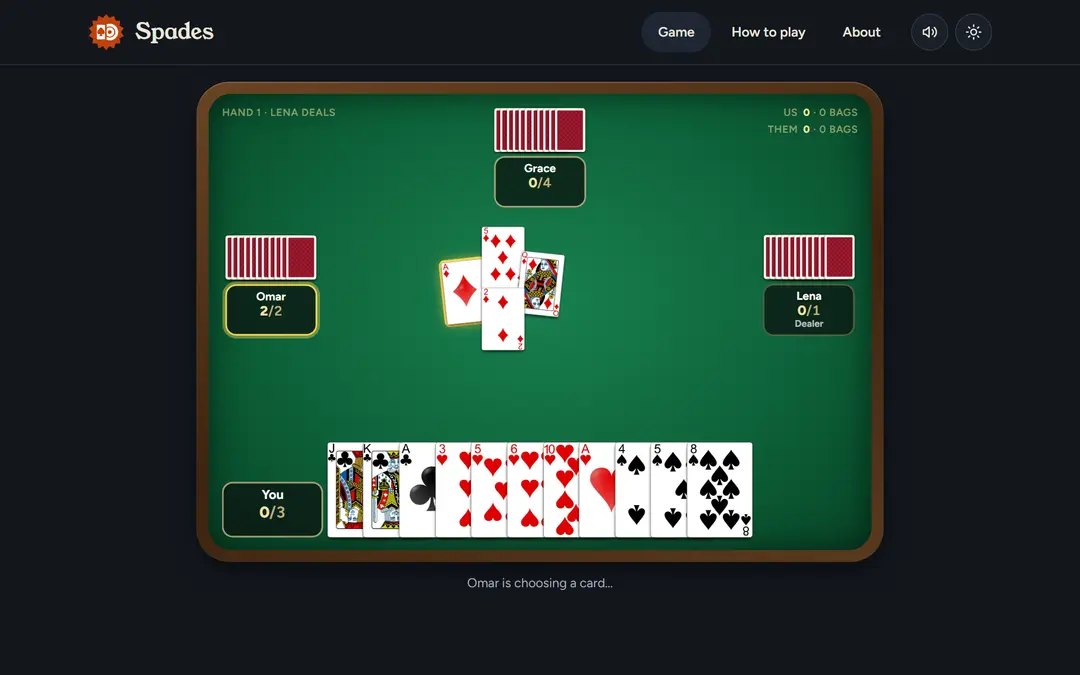
You and your partner Grace against Omar and Lena. Everyone bids the number of tricks they think they'll take, and spades are always trumps. Make your bid and you score, miss it and you lose points, and take too many extra tricks (bags) and that costs you too. If you're feeling brave, bid nil. The first side to 500 wins.
Bridge
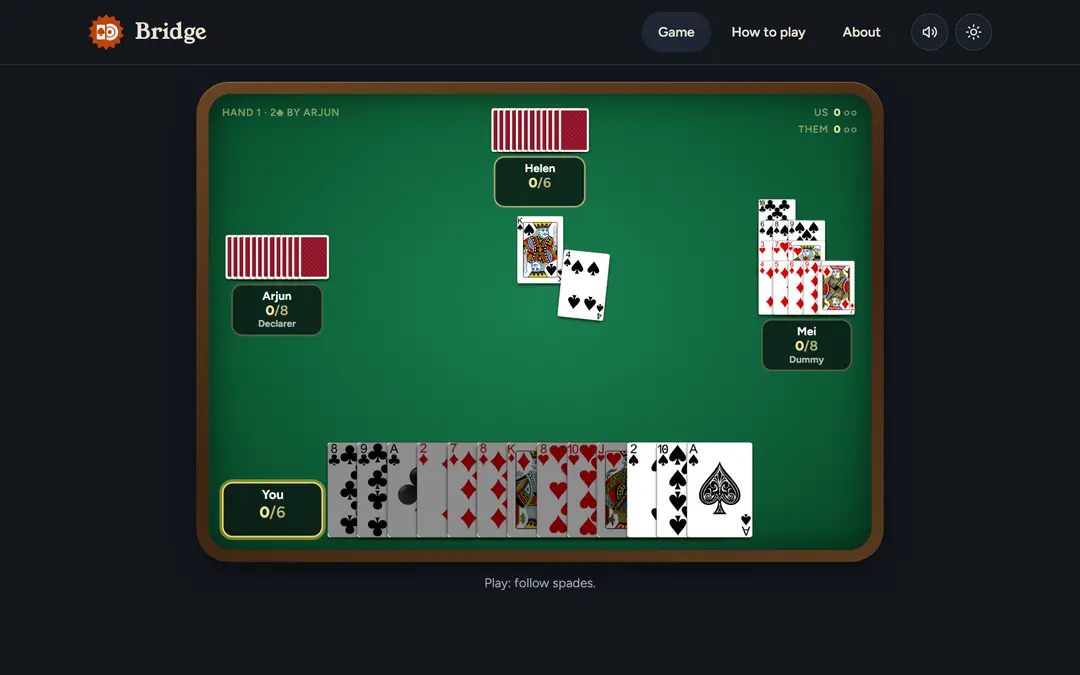
Rubber bridge, with you and your partner Helen against Arjun and Mei. There's an auction, a dummy, and scores above and below the line, all as it should be. When you win the contract you play the dummy's cards as well as your own, and when Helen wins it, she plays yours. Bridge has a lot more rules than the other five, so if you've never played, the "How to play" page is a good place to start.
Cribbage
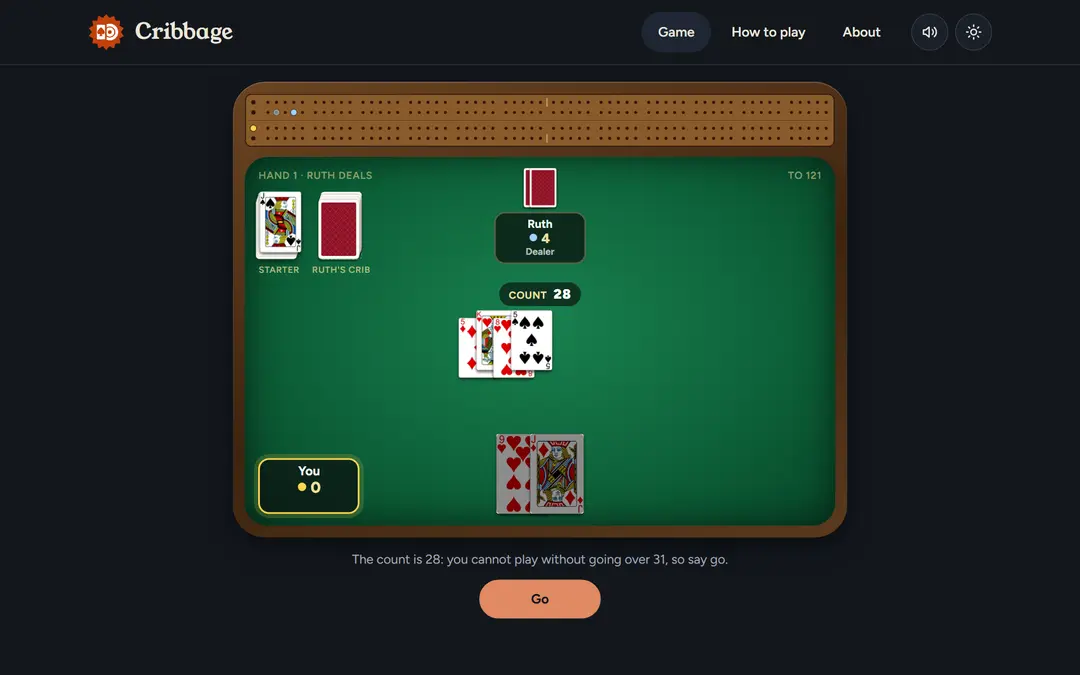
Two-player cribbage against Ruth, first to 121 on a pegging board. Every hand is counted for both of you automatically, so nobody misses a point (or claims one they shouldn't).
Fair play
The cards are shuffled in your browser, using its cryptographic random number generator. Each hand uses a fresh deck, apart from Blackjack, which deals from a six-deck shoe, the way a casino does. The computer players play by the same rules as you, and they never see your cards. So if you keep losing, I'm afraid you can't blame the computer for cheating.
No adverts, no cookies
Like Brand New, the games have no adverts, no cookies and no sign-up. Nothing is saved, either, so refreshing the page starts a new game (handy if a hand is going badly). Visits are counted with Cloudflare Web Analytics, which doesn't use cookies or follow you around the internet. It tells me which pages are opened, but not who opened them.
They all have a light and dark mode switch and sound you can mute (iPhones stay silent anyway if the ringer is switched off), and they can all be played with the keyboard.
The card artwork is by Byron Knoll, who released it into the public domain, and the card and chip sounds come from Kenney's free Casino Audio pack. Thank you to both.
If you enjoy them, there's a "Support me" button in the corner, for Ko-fi. As ever, I can't promise the money will be spent on coffee.
All six are also on the Sites page here on the blog, alongside Brand New, so you don't have to remember six new addresses. It's not such a short list any more.
Open source
The card games are open source, under the MIT licence. If you're a developer and curious how they're put together, or fancy borrowing something for a project of your own, the code is all on GitHub at github.com/MattMcQueen/card-games. They're written in Svelte and TypeScript, and all six share one set of code for the cards, the tables and the sounds.
Over to you
Give them a go, and let me know what you think. Is there a card game you'd like to see next?
Reply to this post on Bluesky, and your reply will turn up in the comments below. Or leave a comment on LinkedIn.
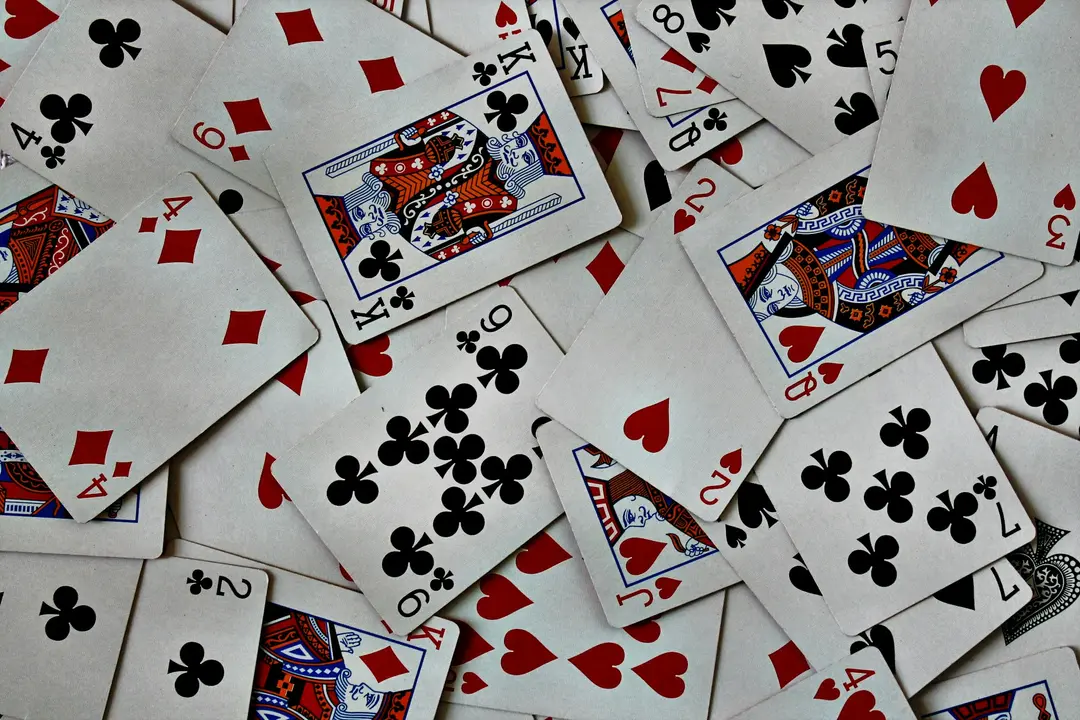
Cover photo by Amanda Jones on Unsplash.